Lift Chair Repair & Power Lift Recliner Service
Power lift chairs combine reclining furniture with an electric lifting system designed to raise the seat and assist the user into or out of a seated position. When a lift chair stops raising, reclining, returning to the seated position, or responding to its hand control, the problem may involve an electrical, mechanical, or structural component.
Recliner Repair Services provides troubleshooting and repair for selected power lift recliners and lift chairs used in homes, senior-living environments, healthcare settings, and other residential or commercial locations. Service availability depends on the chair manufacturer, model, condition, required parts, and service location.
Common Lift Chair Problems
- Lift chair will not raise
- Chair will not lower
- Chair will not recline
- Chair will not return to the sitting position
- Lift chair is stuck in one position
- Hand control or remote does not respond
- Only some control buttons work
- Motor makes noise but the chair does not move
- Motor or actuator operates slowly
- Chair works intermittently
- Footrest will not open or close
- Backrest or footrest moves unevenly
- Power supply or transformer does not work
- Wiring or connectors are damaged
- Lift mechanism makes unusual noises
- Chair feels unstable or uneven
Lift Chair Motor & Actuator Repair
The motor or actuator provides the movement needed to raise, lower, recline, or reposition the chair. Depending on the design, a lift chair may use one motor or multiple actuators to control different functions.
Possible motor or actuator symptoms include:
- No movement when the control is pressed
- Motor makes a clicking, humming, or grinding sound
- Motor operates but the chair does not move
- Chair stops before reaching the correct position
- Movement becomes unusually slow
- Actuator works in only one direction
- Chair operates intermittently
- Actuator becomes disconnected from its mounting point
A chair that does not move does not automatically have a failed motor. The hand control, power supply, wiring, control system, mounting hardware, and mechanical components may also need to be evaluated before determining whether the motor or actuator requires replacement.
Lift Chair Hand Control & Remote Repair
Many lift chairs use a wired hand control to operate the lift, recline, footrest, backrest, or other powered functions. Some models use wireless or multi-function controls.
Control problems may include:
- Buttons do not respond
- Only one direction works
- Control operates intermittently
- Hand-control cable is damaged
- Connector has become loose or disconnected
- Control housing or buttons are physically damaged
- One chair function works while another does not
Replacement controls must be compatible with the chair’s electrical system, connectors, motors, and supported functions.
Lift Chair Power Supply & Transformer Repair
The power supply or transformer converts household electricity into the power required by the lift-chair operating system. If the chair has no power, the problem may involve the outlet, cord, transformer, adapter, wiring, connector, or another electrical component.
Possible power-related problems include:
- Chair has no electrical power
- Power-supply indicator does not illuminate
- Transformer or adapter is damaged
- Power cable is cut or pinched
- Electrical connector is loose
- Chair loses power intermittently
- Battery-backup system does not operate as expected
Replacement power components must match the electrical specifications and connector configuration required by the chair.
Lift Chair Wiring & Connector Problems
Electrical wiring passes between the power supply, controls, motors, actuators, and other powered components. Movement of the chair can place wiring close to mechanisms and structural components.
- Loose electrical connectors
- Disconnected wiring
- Pinched wires
- Damaged control cables
- Wires pulled from connectors
- Damaged wiring near moving mechanisms
Damaged electrical components should not be bypassed with temporary household wiring or incompatible connectors.
Lift Mechanism Repair
The electrical system provides power, but the chair also depends on mechanical components to convert that power into controlled movement. A working motor cannot operate the chair correctly if a bracket, linkage, mounting point, or mechanism has failed.
Lift-mechanism service may involve evaluation of:
- Lift and reclining mechanisms
- Motor and actuator mounting points
- Brackets and linkages
- Pivots and connection points
- Bolts, pins, clips, and fasteners
- Footrest mechanisms
- Frame-to-mechanism connections
- Loose or damaged hardware
Lift Chair Will Not Raise
If a lift chair reclines normally but does not raise into the standing-assist position, the problem may involve a specific motor or actuator, control function, wiring connection, control system, bracket, or mechanical component.
If none of the chair’s powered functions work, the power supply and main electrical connections may need to be checked before individual motors or mechanisms are considered.
Lift Chair Stuck in the Raised Position
A chair stuck in the raised position may have a control, power, actuator, wiring, or mechanical problem. Avoid forcing the chair downward because this can damage the actuator, brackets, mechanism, or frame.
When requesting service, explain whether the chair stopped suddenly, whether the motor can still be heard, and whether any other powered functions continue to operate.
Lift Chair Will Not Recline
Depending on the chair design, the reclining function may share components with the lift system or use a separate actuator. If the lift works but the chair will not recline, troubleshooting can focus on the controls, actuator, wiring, mechanism, and connections responsible for the reclining function.
Lift Chair Footrest Repair
Lift-chair footrests can develop electrical, mechanical, or structural problems. The footrest may stop opening, fail to close, move unevenly, or become stuck in one position.
- Footrest will not extend
- Footrest will not retract
- Footrest moves slowly
- One side sits unevenly
- Mechanism makes unusual noise
- Bracket or linkage is loose
- Powered footrest actuator does not operate
Lift Chair Frame & Structural Repair
Not every lift-chair problem is electrical. The frame and structural components support the user’s weight as well as the forces created when the chair lifts and reclines.
Selected structural service may include evaluation of:
- Loose or separated frame components
- Damaged mounting areas
- Loose structural joints
- Seat-support problems
- Damaged brackets or hardware
- Mechanism alignment problems
- Structural reinforcement needs
Lift Chair Upholstery, Leather & Vinyl Repair
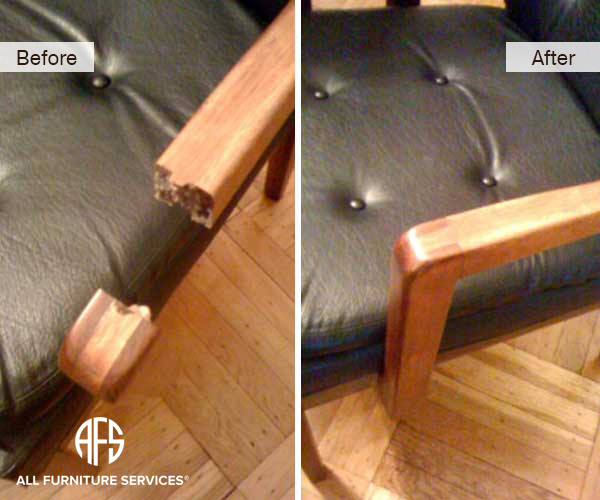
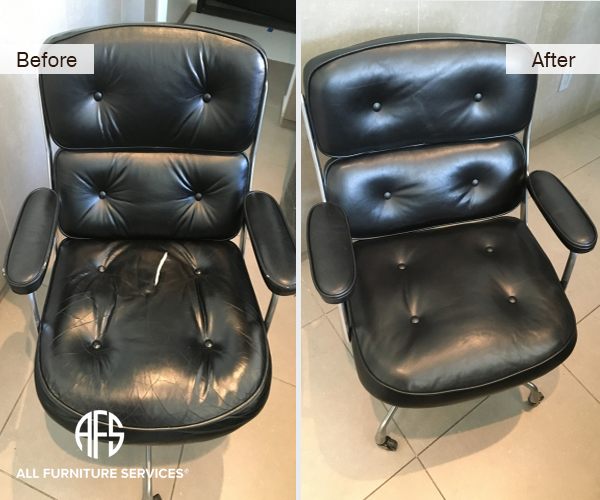
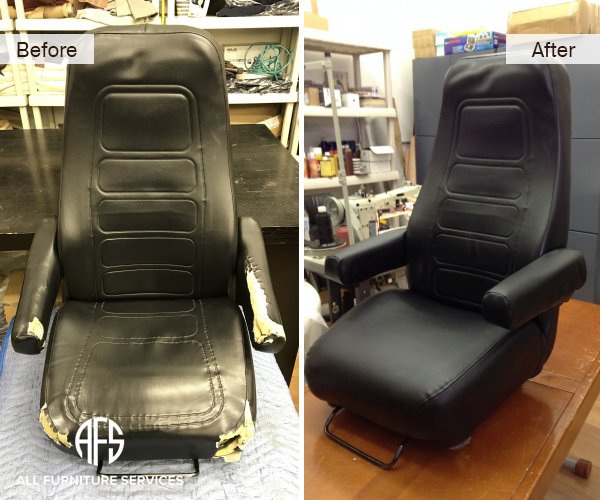
Lift chairs can also develop upholstery damage from regular use. Depending on the material and condition, selected service may be available for tears, open seams, scratches, worn areas, padding, leather, vinyl, or fabric upholstery.
For specialized leather and vinyl furniture information, visit Leather Repair Service.
Home, Senior Living & Commercial Lift Chairs
Lift chairs are used in private homes, senior-living environments, assisted-living facilities, healthcare settings, and other locations where powered seating is needed.
Service can be evaluated for individual chairs as well as multiple pieces of powered seating, depending on location, furniture type, technician specialty, and parts availability.
Identifying Lift Chair Replacement Parts
Lift-chair motors, actuators, controls, transformers, and other components are not universally interchangeable. Compatibility can depend on the manufacturer, model, electrical specifications, connector type, actuator measurements, mounting configuration, and supported functions.
Before ordering a replacement part, gather available identification information:
- Chair manufacturer
- Chair model number
- Serial number when available
- Motor or actuator label
- Hand-control information
- Power-supply label
- Control-box label when applicable
- Connector photographs
- Photographs showing how the component mounts to the chair
Before Requesting Lift Chair Repair
Providing detailed information and photographs can help identify the type of service that may be required.
- Photograph the complete chair.
- Photograph the manufacturer and model label.
- Photograph the hand control or remote.
- Photograph the motor or actuator label when safely accessible.
- Photograph the power adapter or transformer.
- Describe which chair functions work and which do not.
- Explain whether the motor makes any sound.
- Provide your service ZIP code.
Do not force a chair that is stuck in a raised, reclined, or extended position. Clear photographs from safely accessible areas are generally sufficient for an initial review.
Lift Chair Repair Service Areas
Lift chair repair availability depends on the service ZIP code, chair manufacturer and model, required specialty, parts availability, and technician coverage.
View our recliner and lift chair service areas, or submit the request even if your location is not specifically listed because additional coverage may be available.
Power Furniture Repair Resources
For additional powered reclining furniture troubleshooting, visit our Power Recliner Repair information.
For motors, actuators, mechanisms, controls, cables, springs, brackets, and other recliner components, see our Recliner Parts & Mechanism Repair information.
For broader furniture repair, mechanism service, structural repair, upholstery, wood, leather, vinyl, and commercial furniture service, visit All Furniture Services®.
Service Management with ServiceJan℠
ServiceJan℠ provides service-management technology for work orders, scheduling, dispatch, customer communication, technician coordination, service territories, photographs, reports, invoicing, and other field-service operations.
Customers can also use the ServiceJan service marketplace and app to search for and request service providers in available areas.
Request Lift Chair Repair
Submit a lift chair service request with the chair manufacturer and model when available, service ZIP code, photographs, and a description of the problem.
Customer Service: 718-268-2727
Text / SMS / MMS: 321-414-6757
Toll Free: 888-575-6757
Email: reclinerrepair@furnitureservices.com